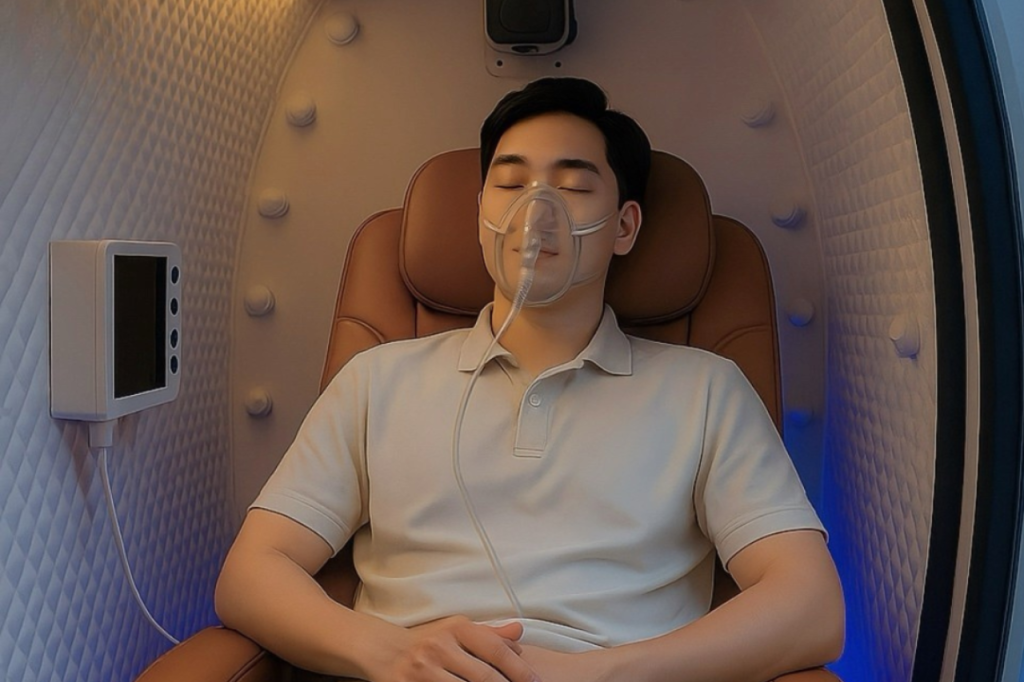
Engineering Precision: How Pressure and Oxygen Work Together in Modern Chambers

Precision defines the new era of oxygen technology. As hyperbaric systems evolve from early mechanical designs into sophisticated, sensor-driven environments, the relationship between pressure and oxygen delivery has become the foundation of performance, consistency, and safety.

At SpringsLab, this principle drives every design choice — from pressure calibration to airflow engineering — ensuring each chamber provides a stable, efficient, and research-grade oxygen environment.

The Science of Pressure

Pressure is the silent force behind oxygen absorption. According to Henry’s Law, the amount of gas that dissolves in a liquid is directly proportional to the surrounding pressure.

When atmospheric pressure increases inside a controlled chamber, more oxygen dissolves into the air mixture and, ultimately, into human tissues during use.

Even a small increase in ATA (atmospheres absolute) can create a measurable difference in oxygen saturation potential.

Engineering Stability and Safety

Creating and maintaining this precise environment requires advanced engineering systems that balance pressurisation, airflow, and temperature.

Every component — from the pressure vessel design to valve response timing — must perform within narrow tolerances. SpringsLab chambers are engineered for repeatability, allowing consistent results.